 Workato · 2024–2025
Helping you customize your data schema
Workato moved data between systems in real time but couldn't replicate it at volume. I led design on the features that closed the gap. The product itself had already shipped, designed by someone else.
Workato's integration platform let disparate systems talk to each other in real time, but it could not move large volumes of data for analysis or storage. Enterprises kept a second vendor for that half of the job, usually Fivetran or Informatica.
A v1 of data pipelines had already shipped and the designer on it had moved to other work. I joined to take the team through a roadmap of more sources and destinations and deeper replication capabilities, on a core UX that was already in users' hands. The constraint shaped everything: propose patterns that scale to features not yet specified, without introducing changes users didn't ask for.
Every feature on the roadmap landed on one of these four. Where it landed decided which existing pattern it should extend.
Put PII control on the field, not in a settings page
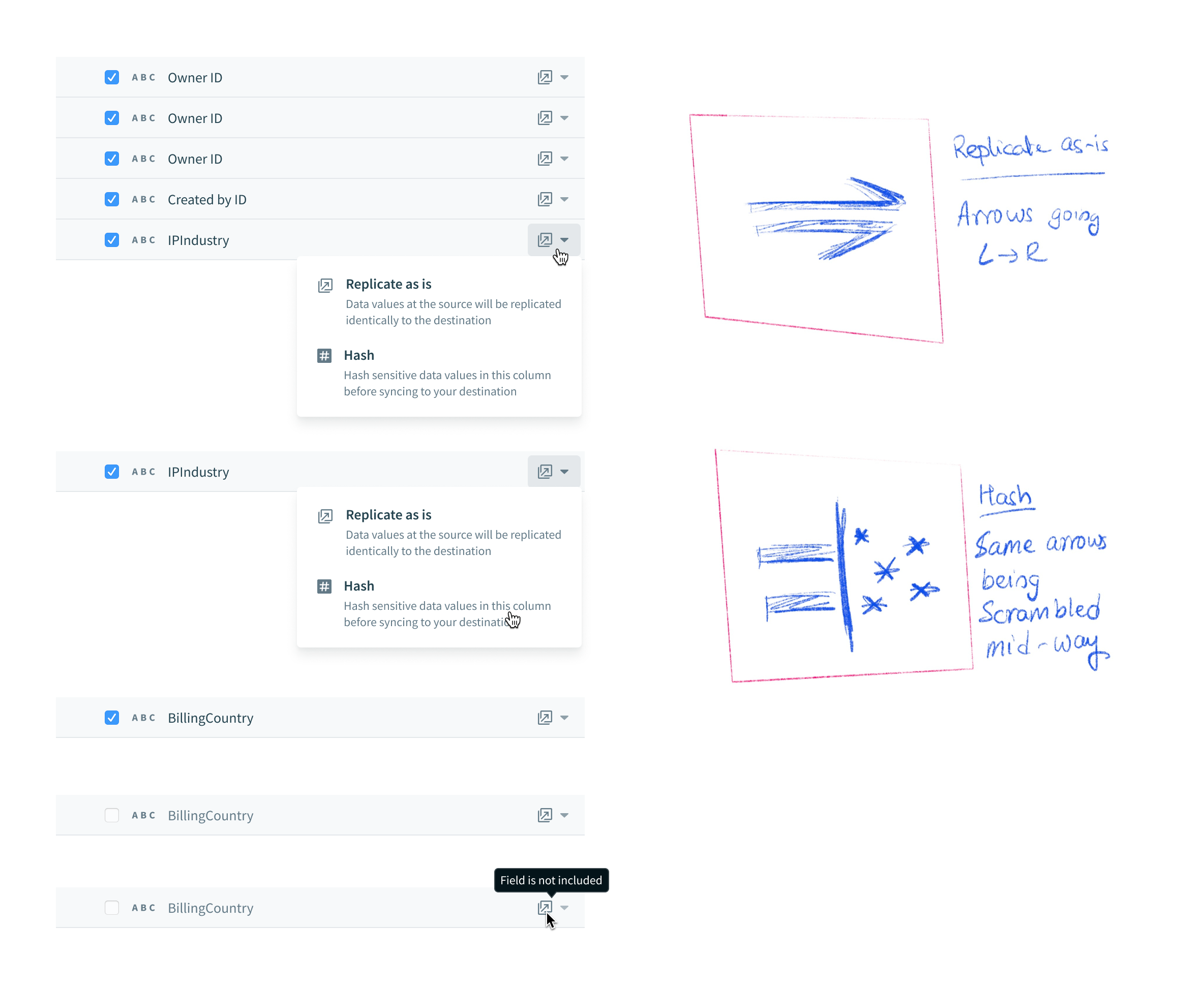
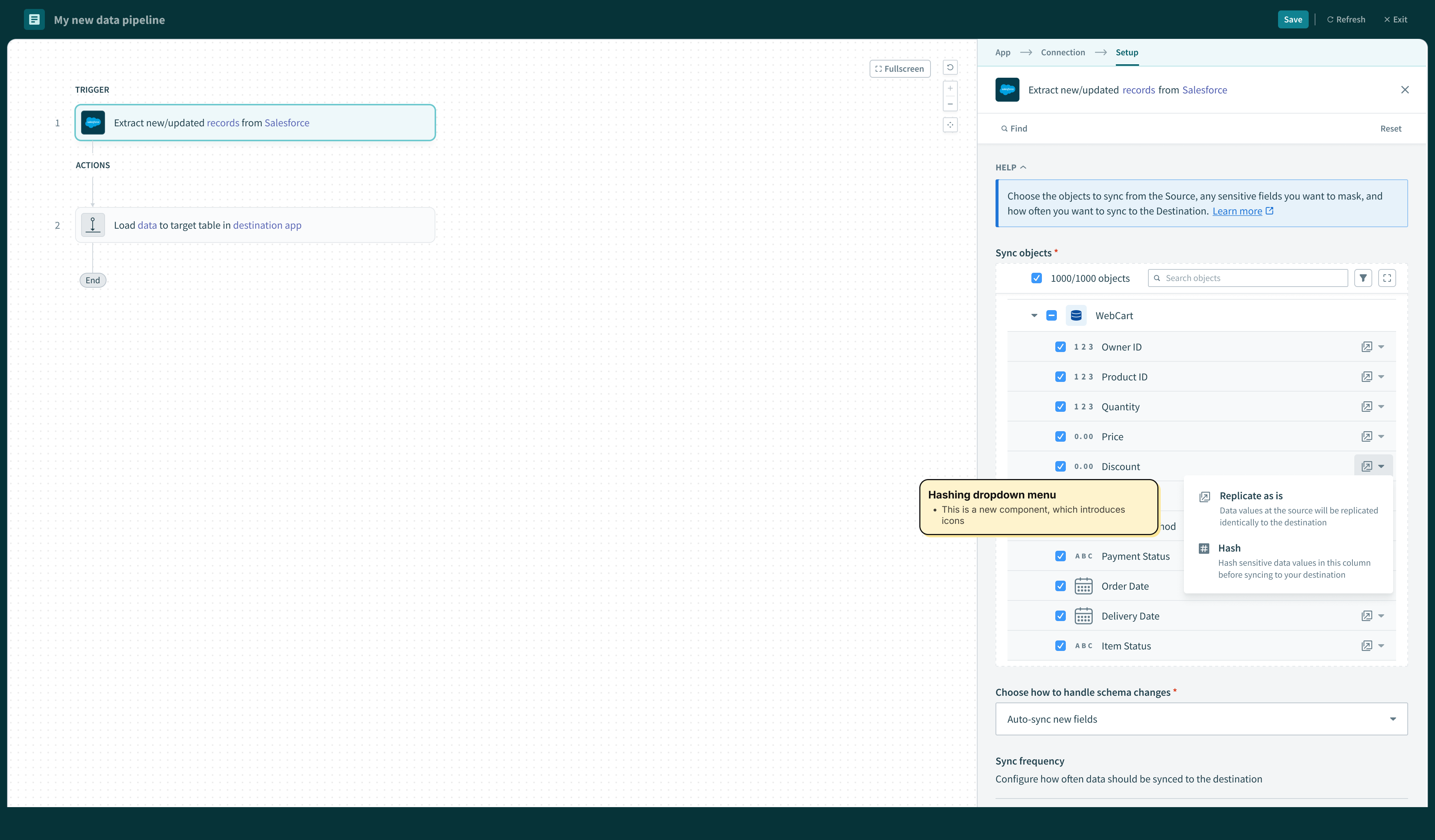
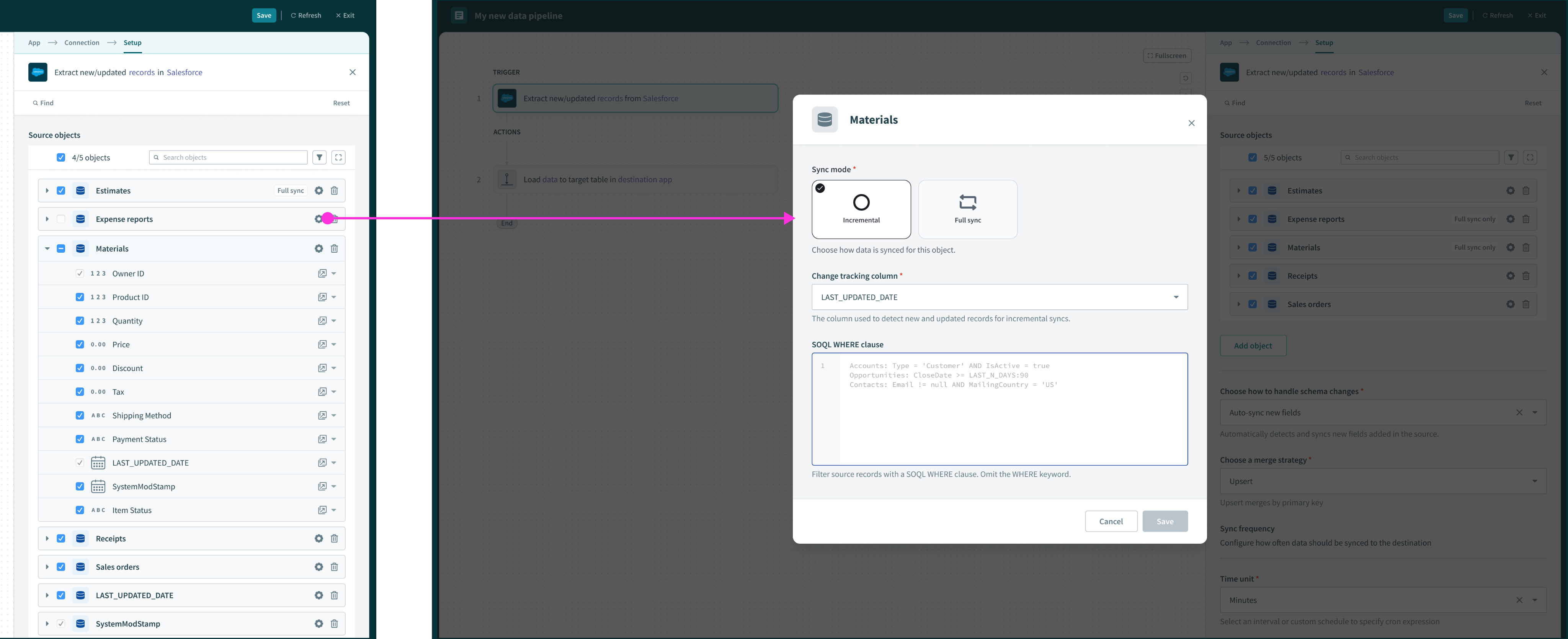
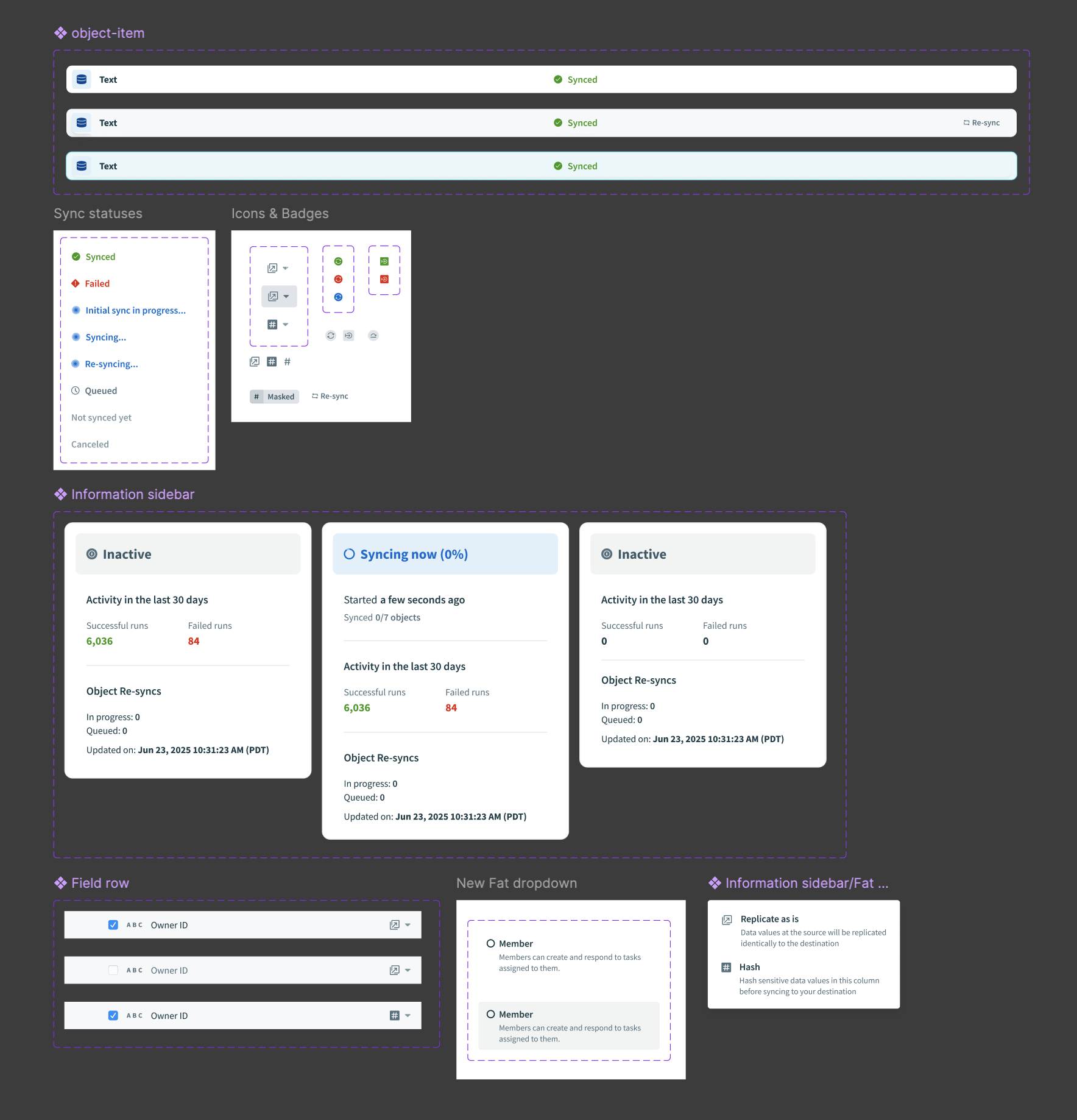
Sensitive fields have to be protected before they are replicated, and the decision is per field. The PM and I wrote the copy for a field-level control that lets a user hash a value or replicate it as is, and placed it in the right margin of the schema row. It sits next to the thing it applies to.
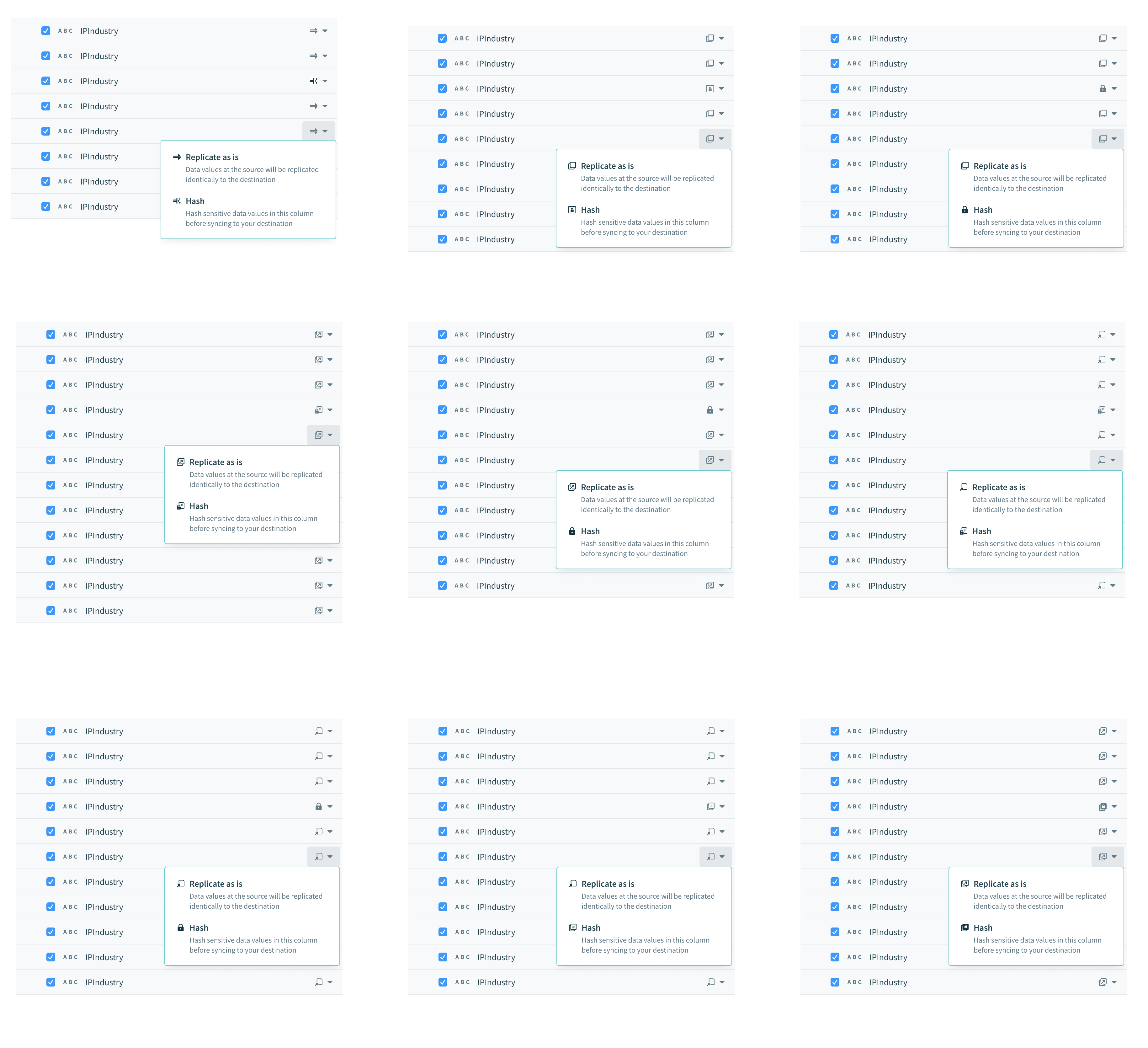
I explored a range of hash icons so the mark would sit systemically with the surrounding copy and read correctly on its own, without a label to carry it.
Reuse the margin affordance one level up
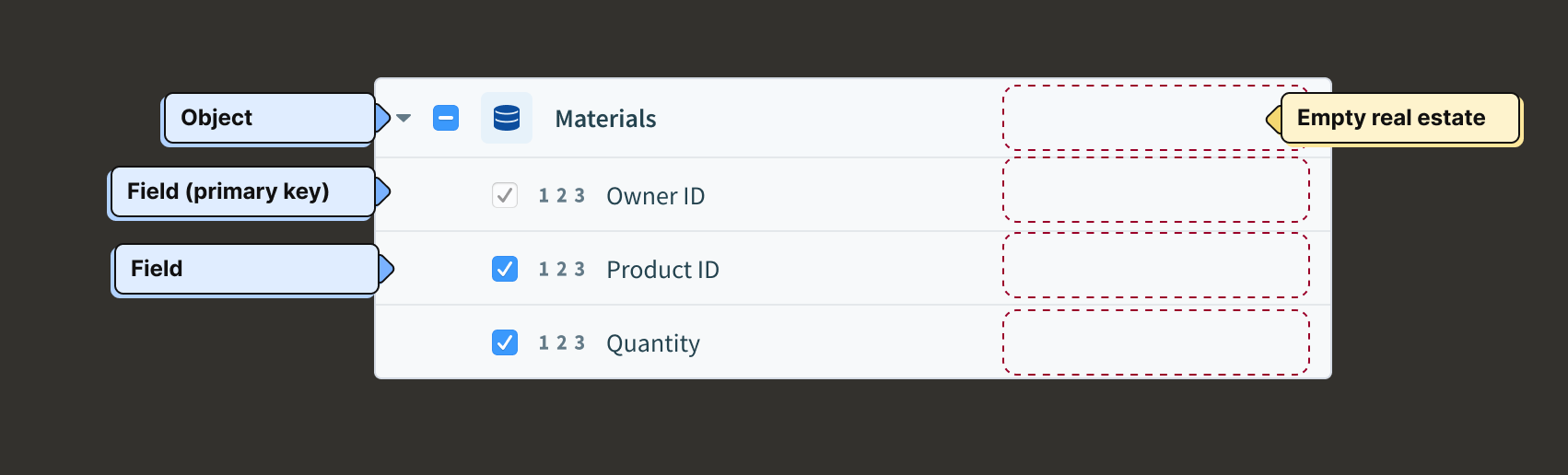
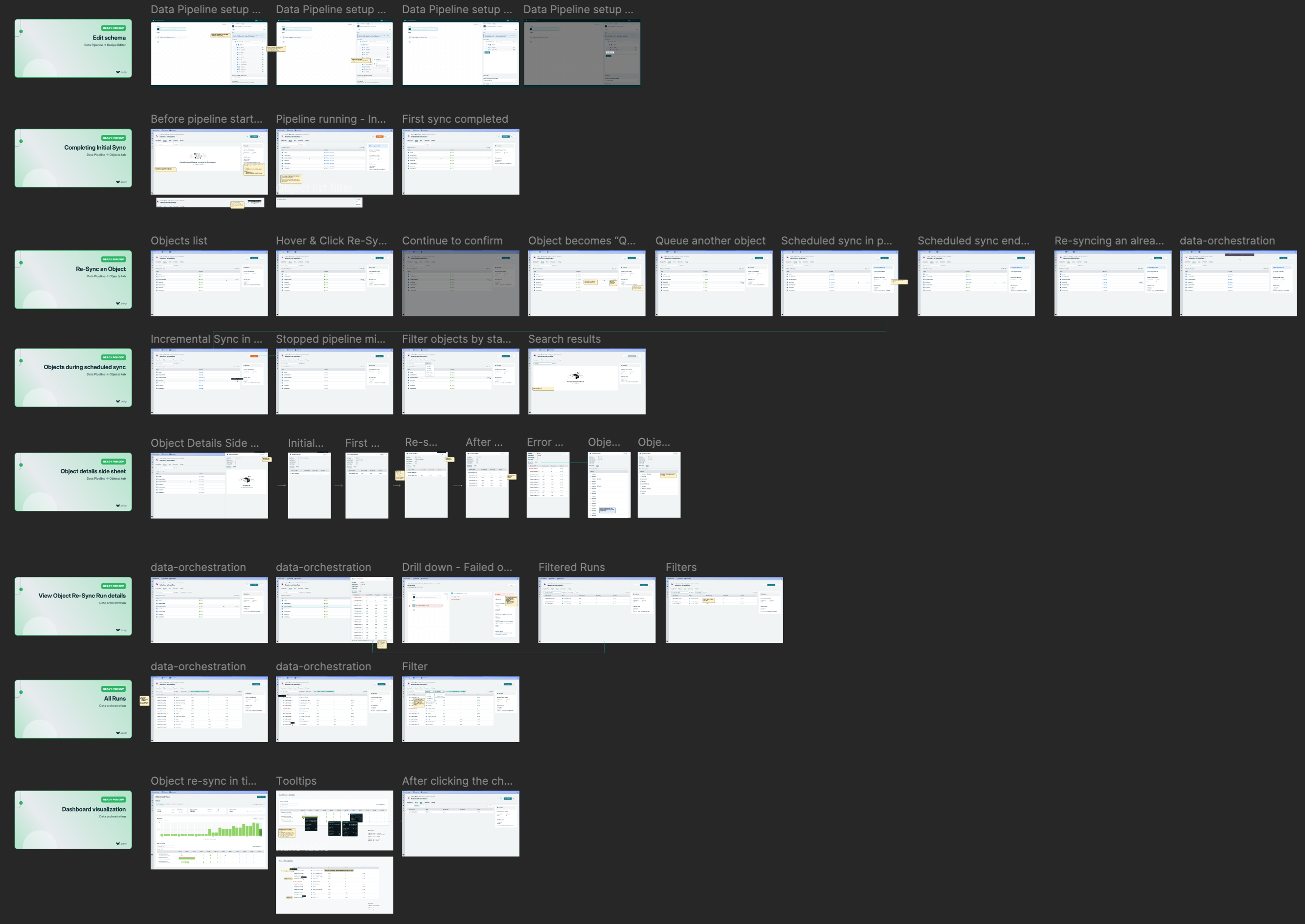
Users needed to trigger a one-time sync on an individual object, so data movement wasn't locked to the schedule. That meant object-level actions and object-level settings had to live somewhere the schema view already went.
Rather than open a new surface, I extended the right-margin affordance introduced for hashing to the object row. One learned gesture, two scopes. The next feature could take the same pattern without a redesign.
Three kinds of sync now had to be legible in one chart
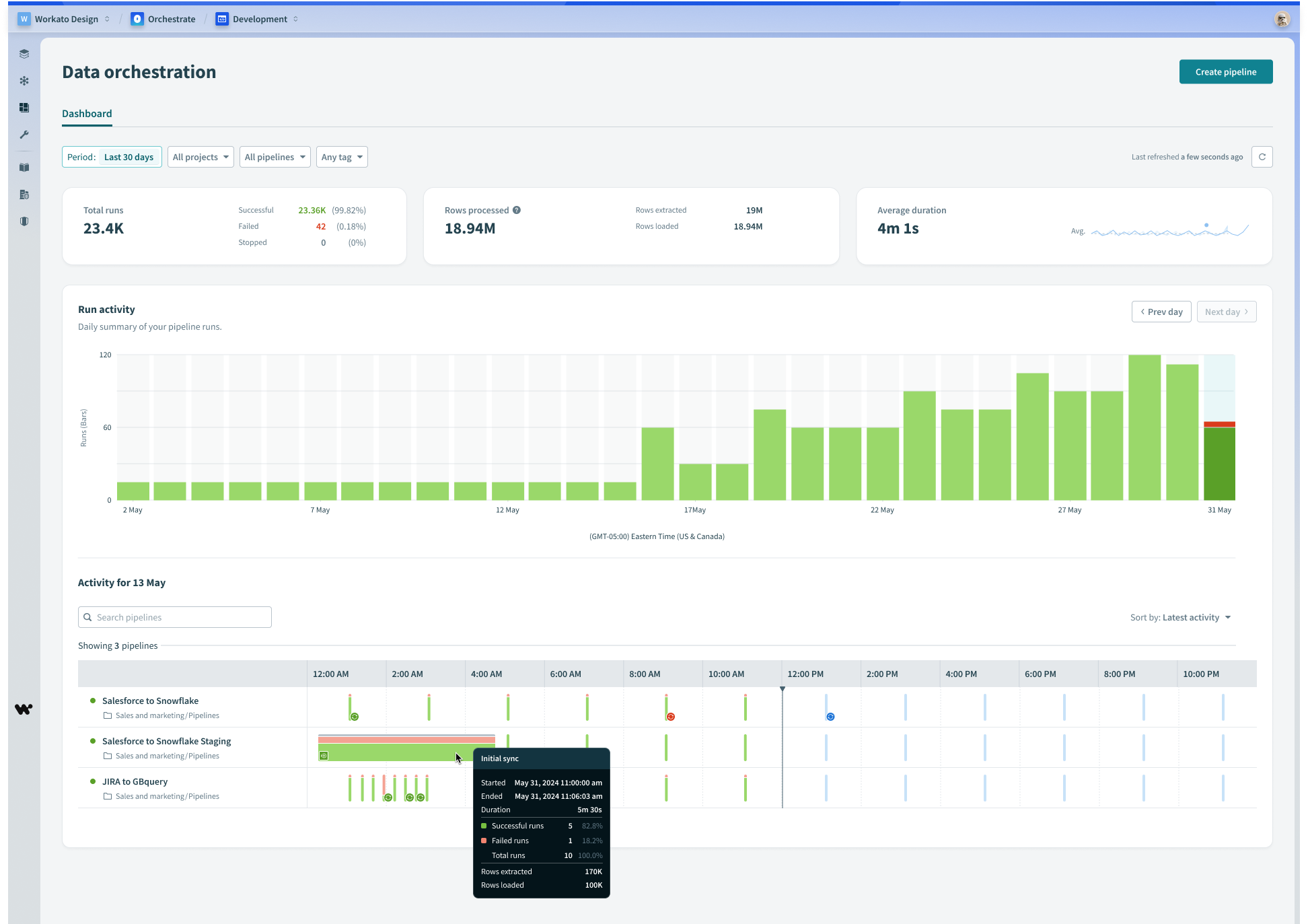
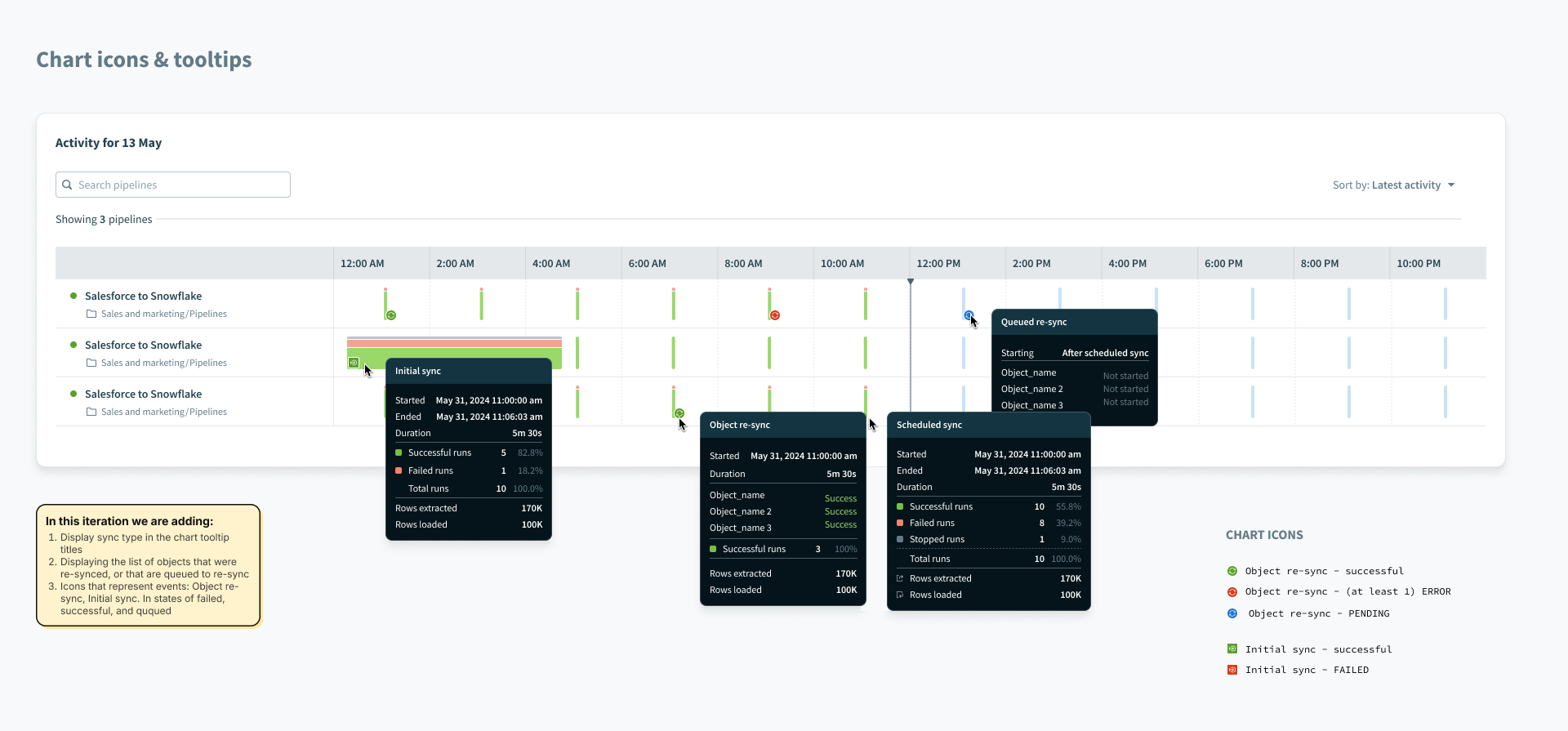
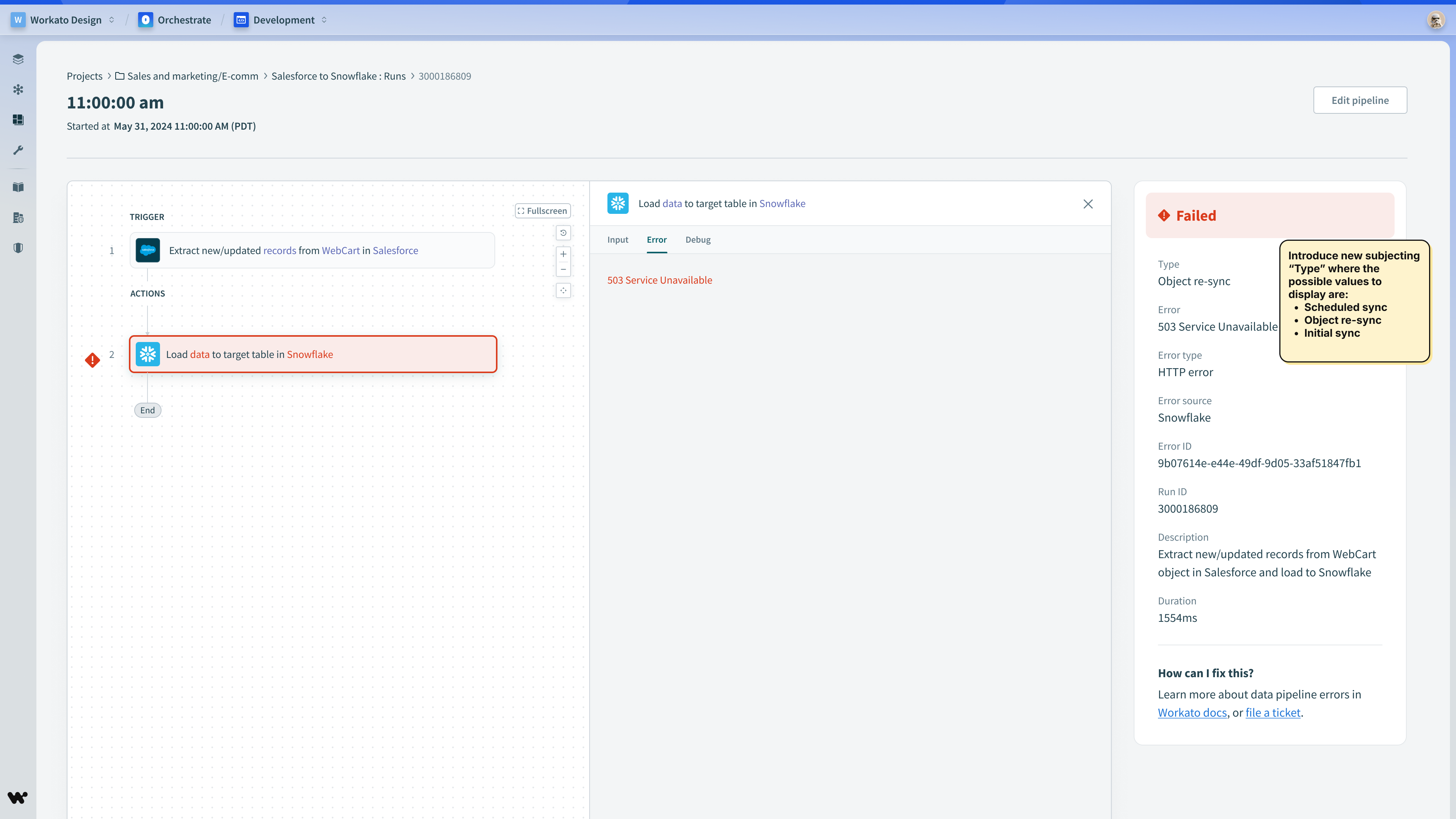
Adding object re-syncs meant the dashboard was suddenly reporting three things at once: initial syncs, incremental syncs, and re-syncs. Reading the chart no longer told you what kind of run you were looking at.
We introduced indicator icons in the chart views and carried them into tooltips, so type is visible at a glance and explained on hover. A small addition, and it kept the existing dashboard intact rather than replacing it.
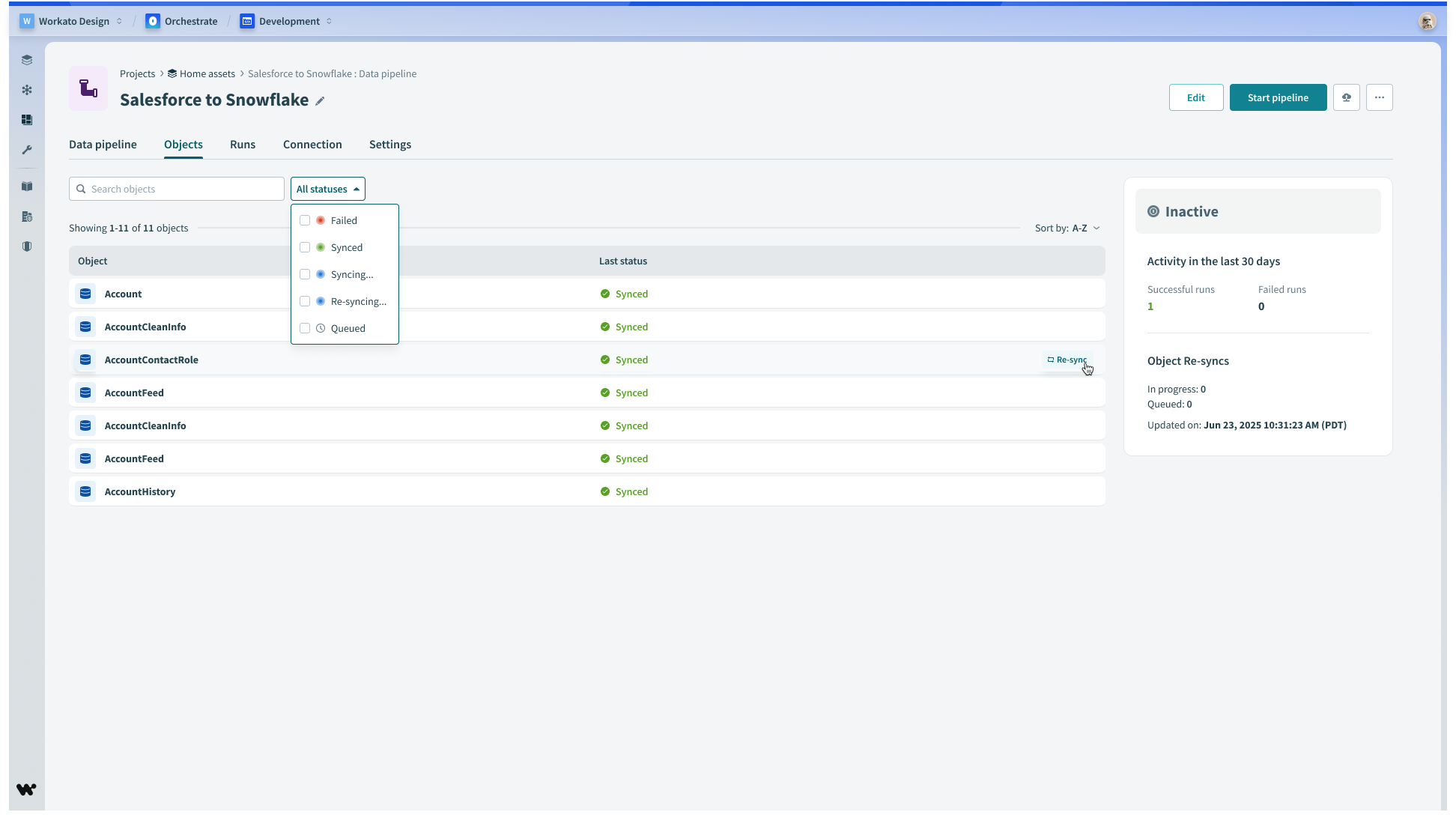
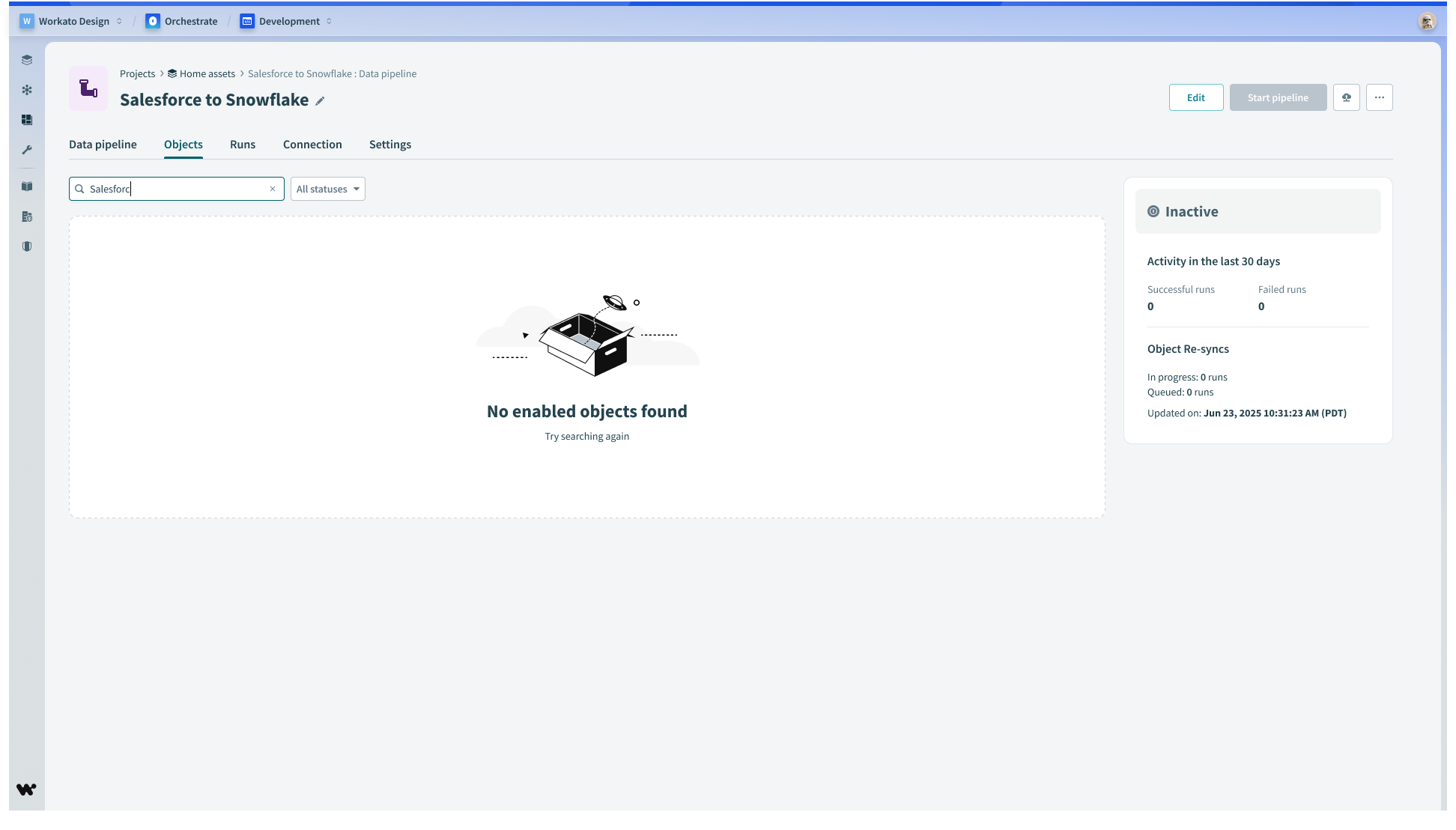
The pipeline pages reported on runs, not on objects. If one table out of eleven was stale, the only way to find it was to read the run history and infer. We added an Objects tab that lists the active schema with a last-status per object, filterable by state, so the answer to "is my data current" takes one glance instead of a reconstruction.
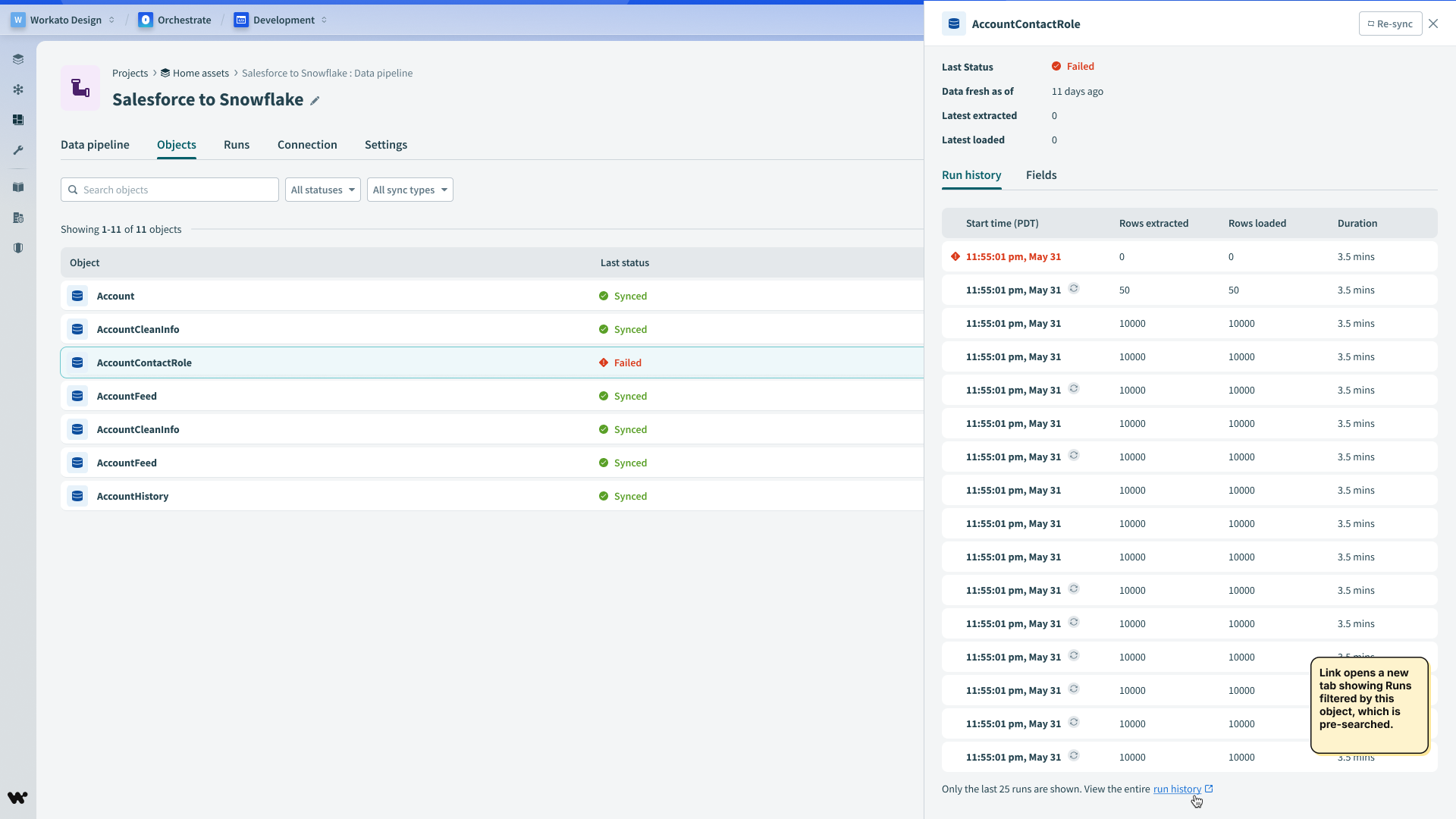
Alongside it we shipped the most requested capability in the product's feedback: a manual re-sync button, per object. Sync schedules exist for good reasons, but a data engineer who has just fixed a mapping or a permission should not have to wait for the next window to prove it. The button appears on row hover and in the object drawer, and each manual run is labelled as an object re-sync in run history so scheduled and on-demand work stay distinguishable after the fact.
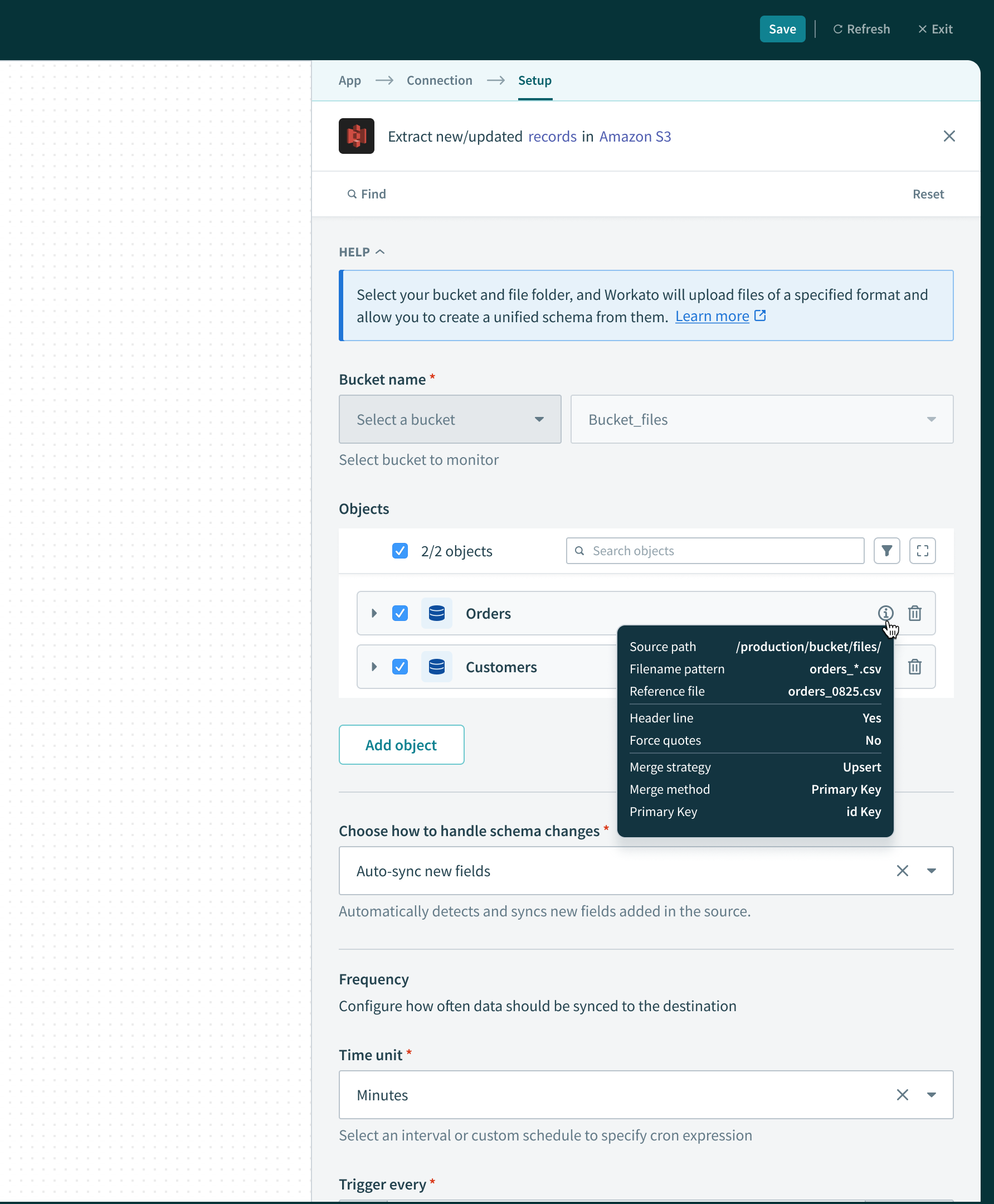
Each release added components and patterns back to the shared library, so the next feature started from something rather than nothing. A later file-connector pipeline needed more metadata surfaced per row; the icon-and-tooltip pattern already existed and absorbed it without a new layout.
Inheriting a product is a design constraint with a payoff. I respected the prior work and extended its affordances instead of replacing them. That is what let three features land in a row without anyone relearning the screen.